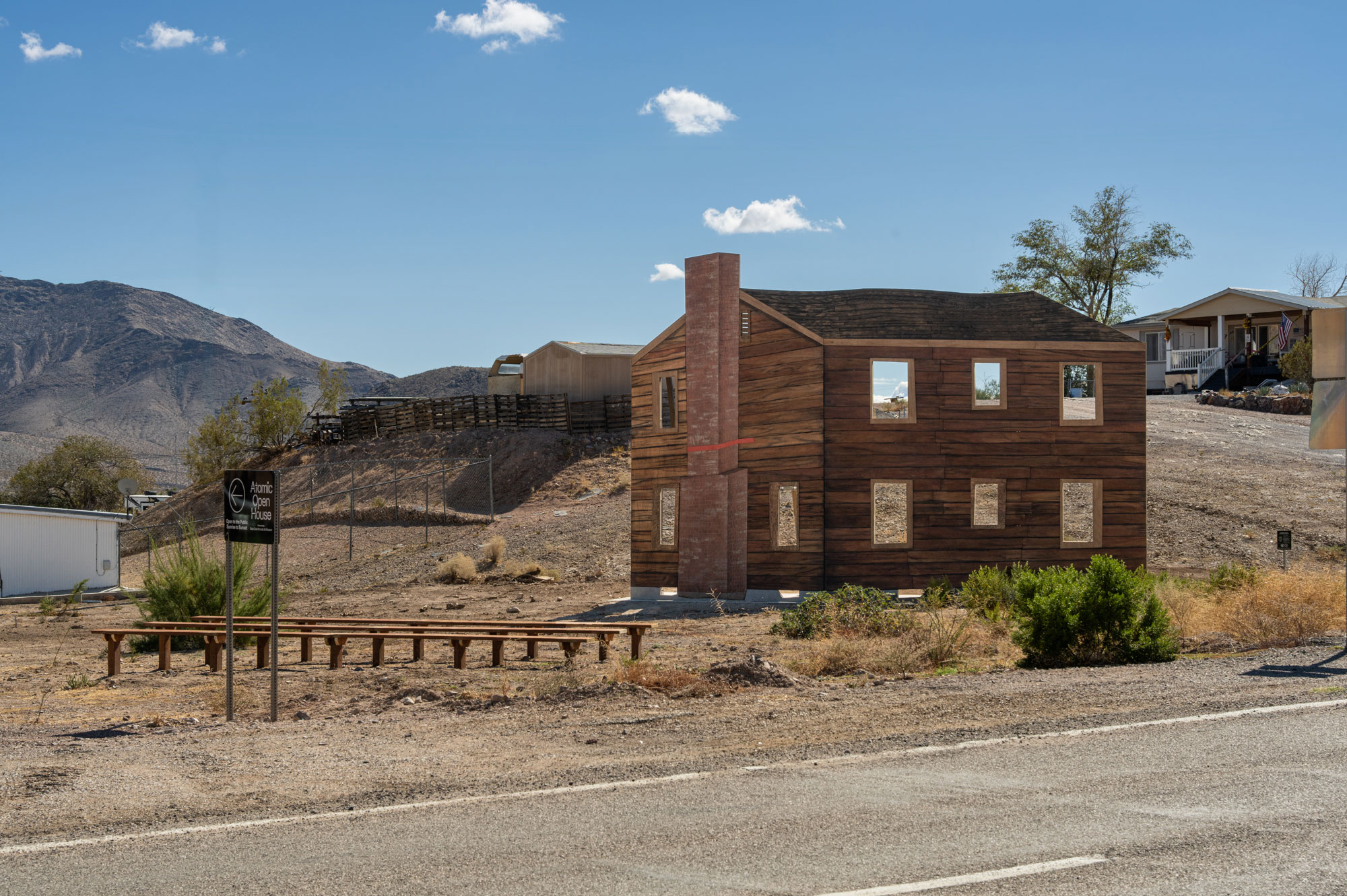
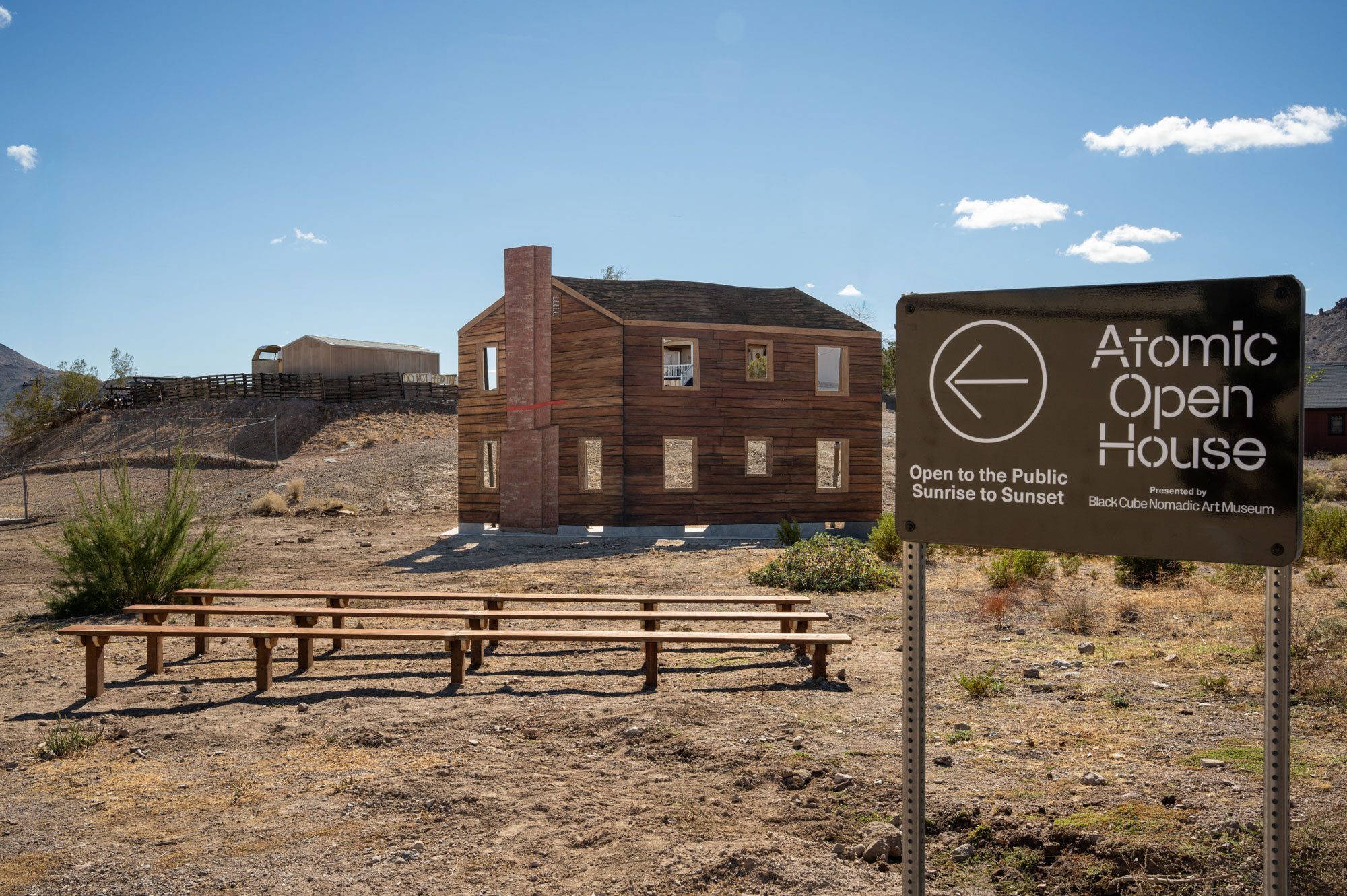
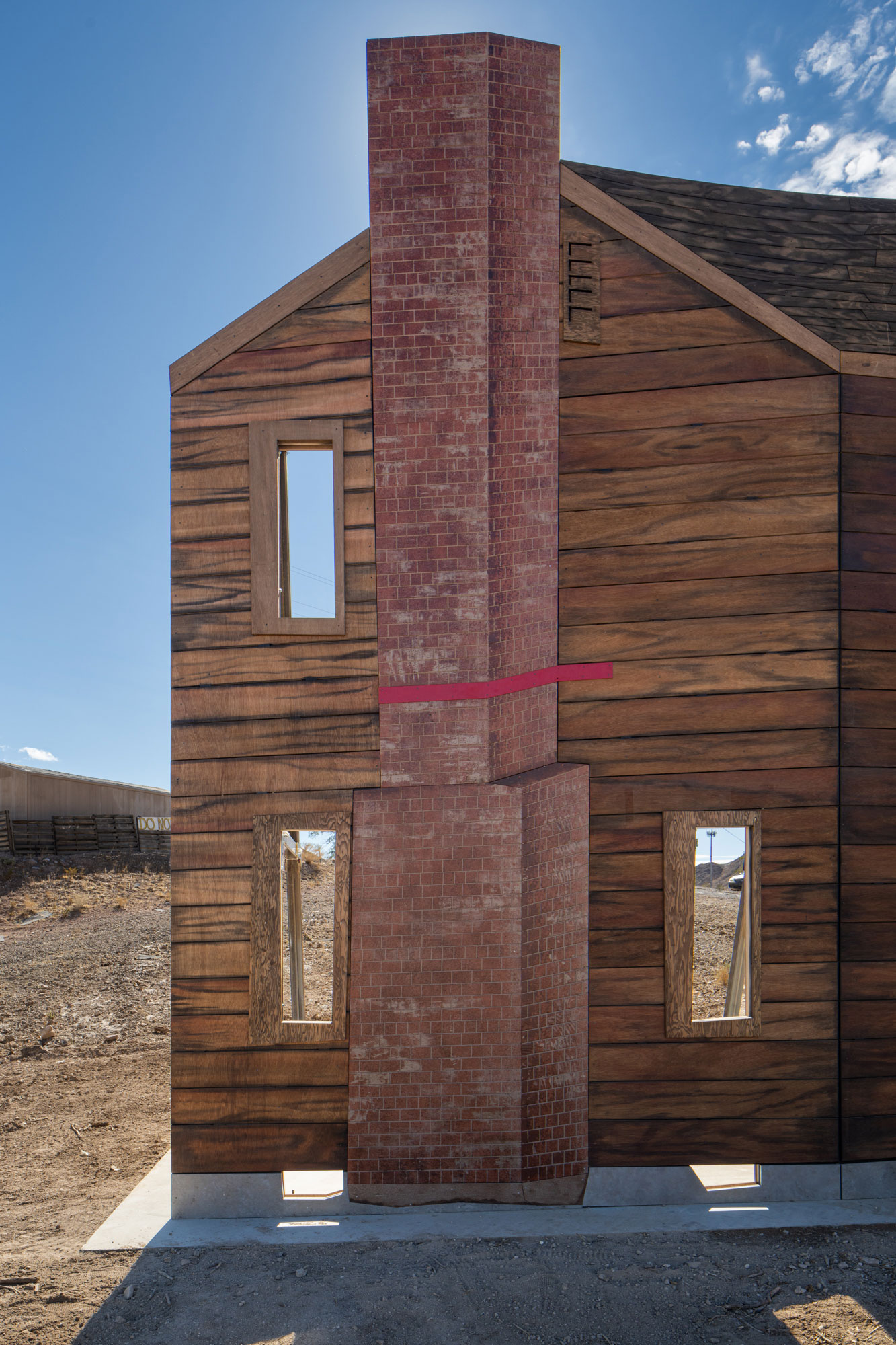
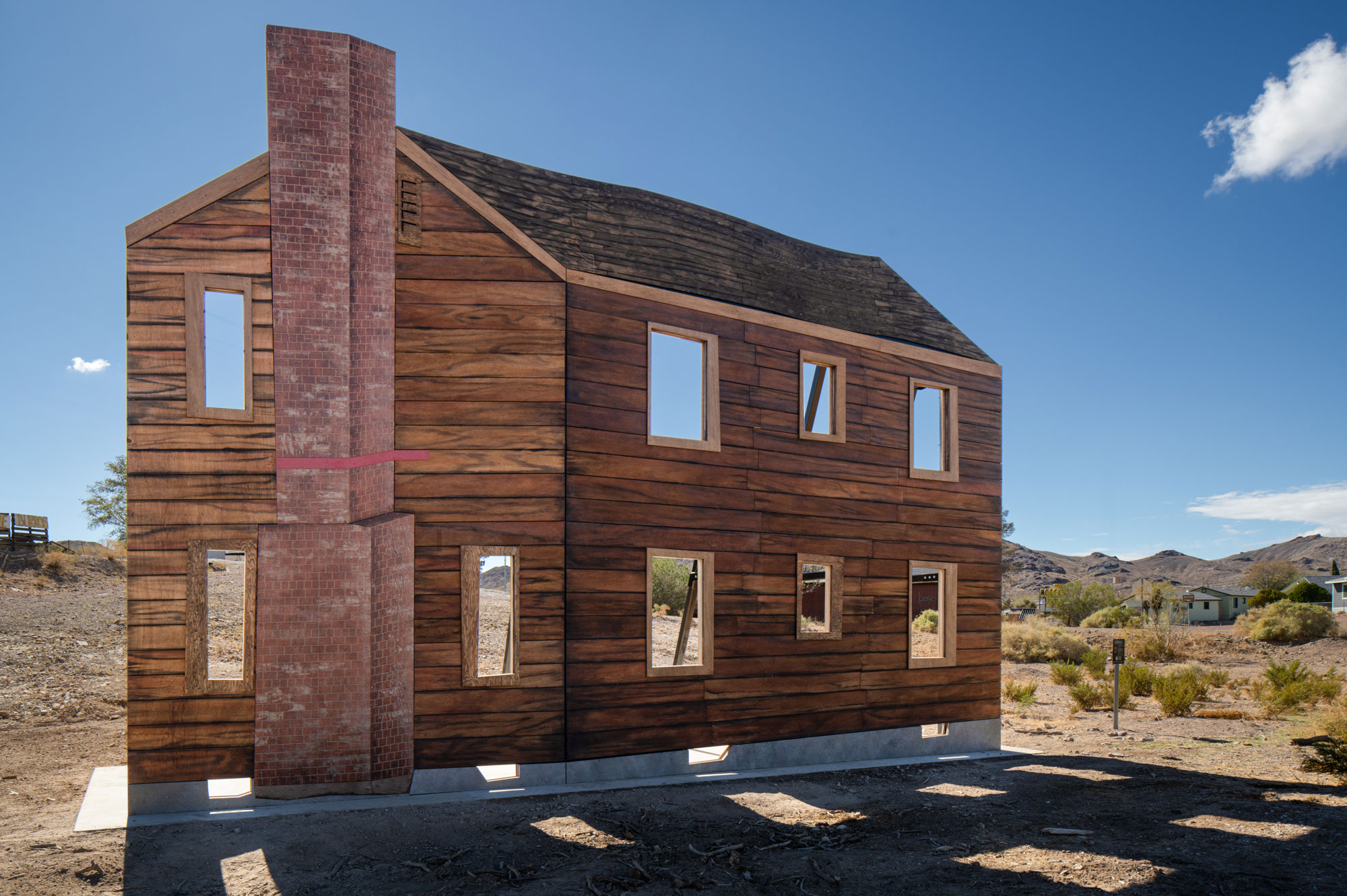
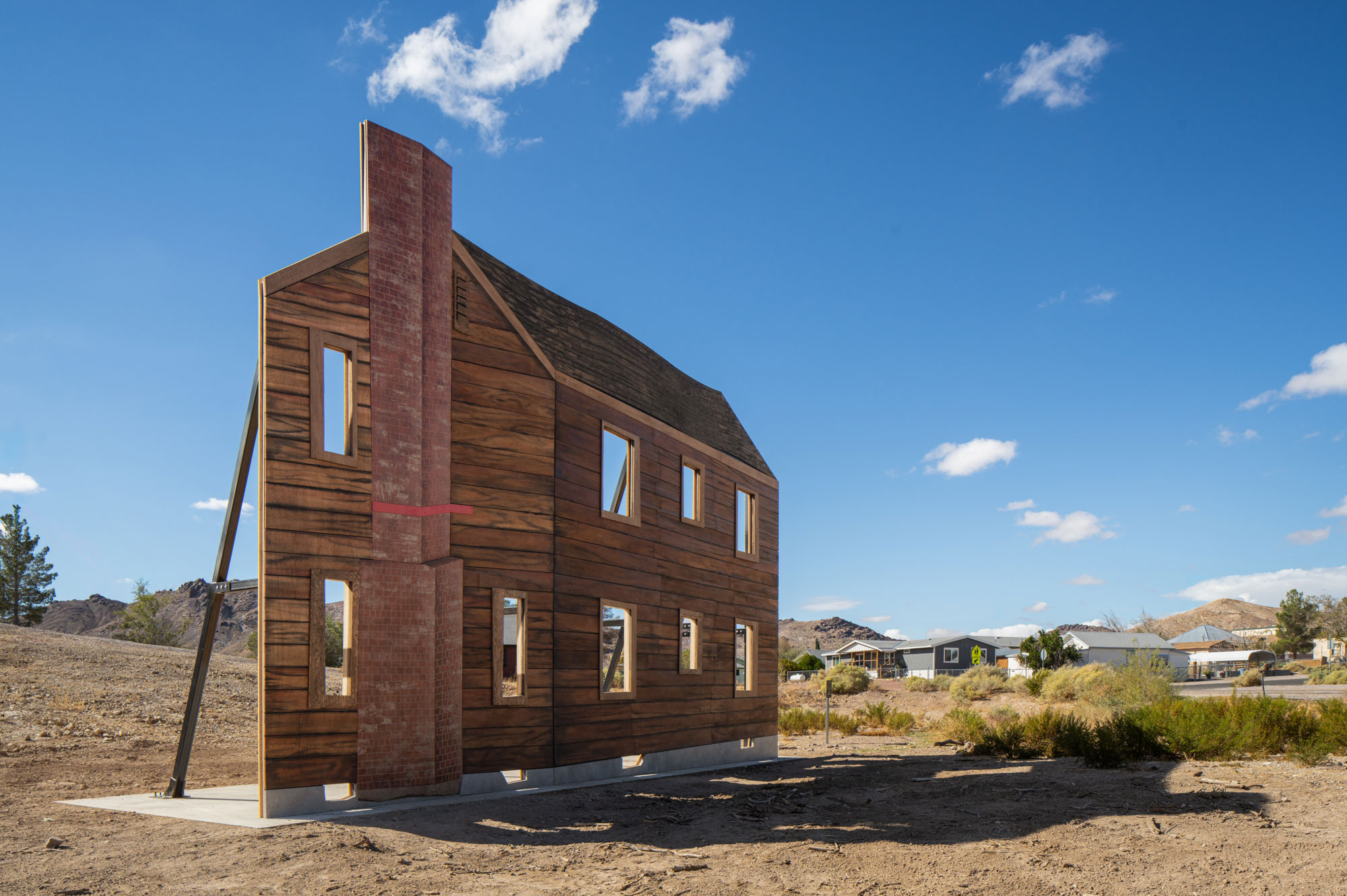
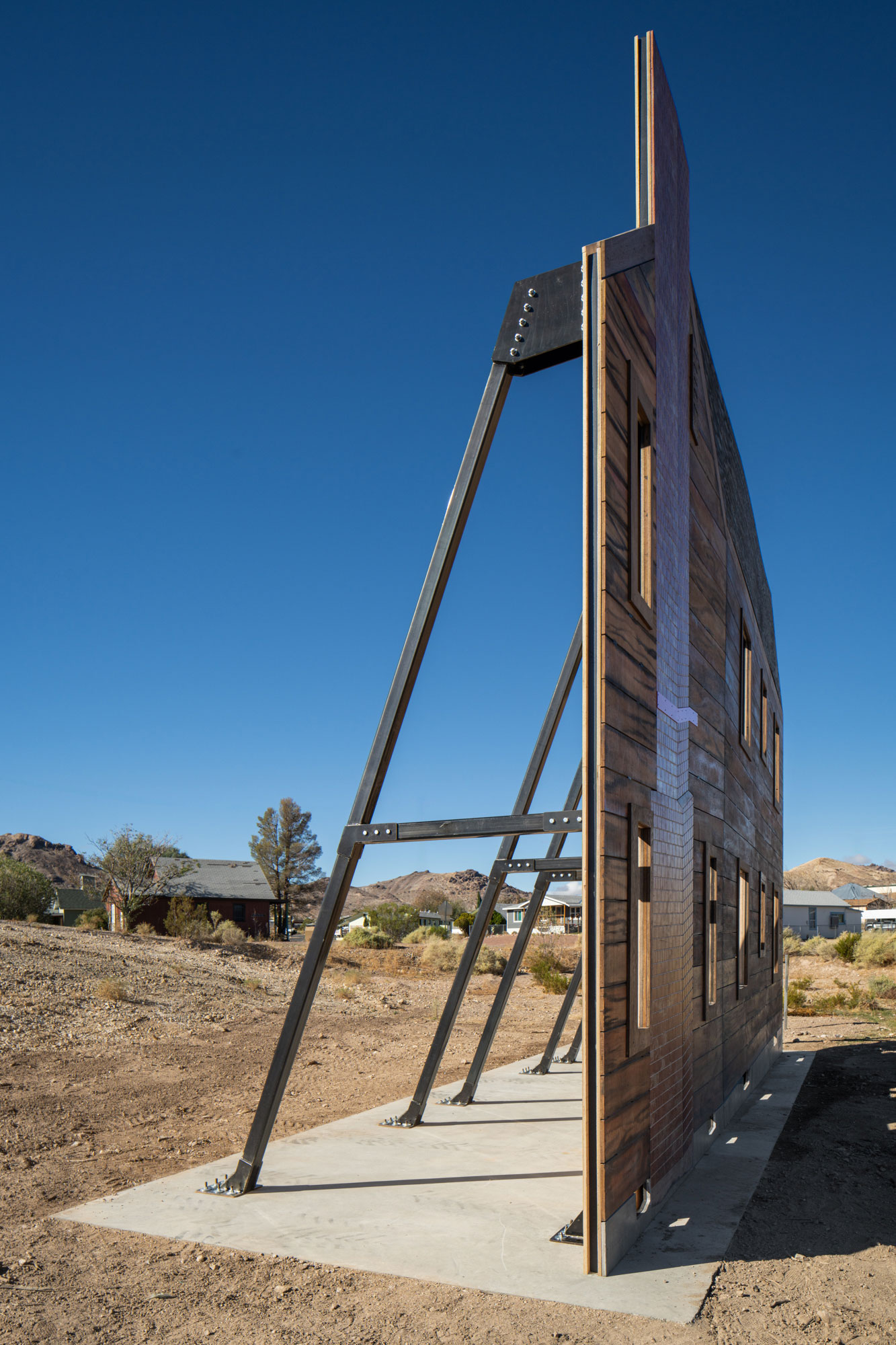
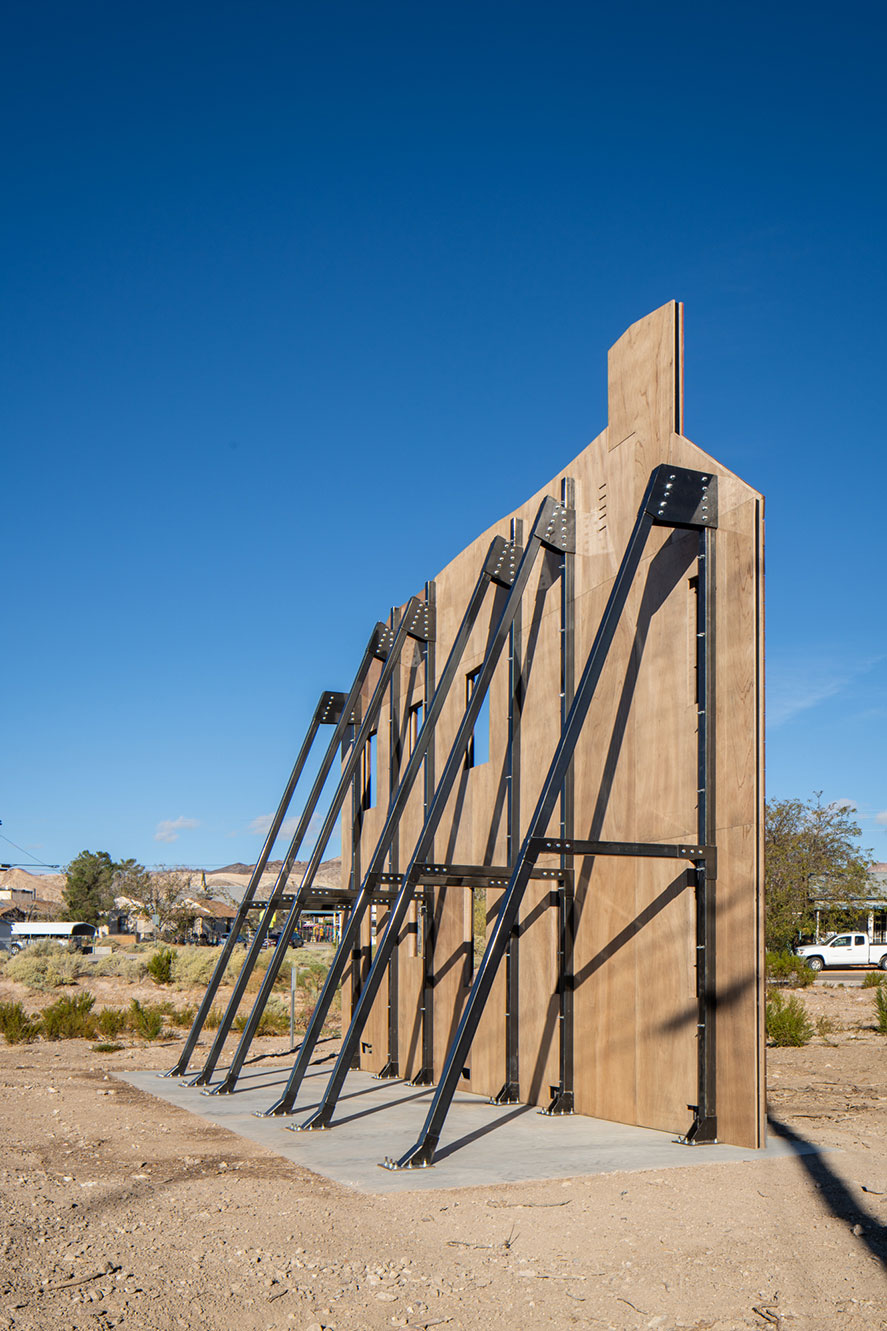
Situated in one of the closest communities to the NNSS, where many residents still remember the tests and their impacts, Atomic Open House uses the slippage between reality and perception to invite reflection on how architecture, images, and carefully constructed viewing experiences helped make nuclear weapons development appear familiar, manageable, and even entertaining. More broadly, the project also engages our understanding of land use, environmental risk, and military presence in the American West.
The Spectacle of Nuclear Testing
After the development and use of the atomic bomb in 1945, the United States government moved its nuclear weapons experimentation program to the Pacific. Due to security and logistical issues, the need for a continental test site arose, leading to consideration of alternative locations. A section of the Nellis Air Force Gunnery and Bombing Range in Southern Nevada was selected and established as the Nevada Proving Ground in December 1950. In 1955, the name was changed to the Nevada Test Site.1 Between 1951 and 1992, the 1,350-square-mile Nevada Test Site was used by the United States government to test nuclear bombs.2 During this era, the Site hosted 928 nuclear tests, 100 of which were atmospheric detonations.3
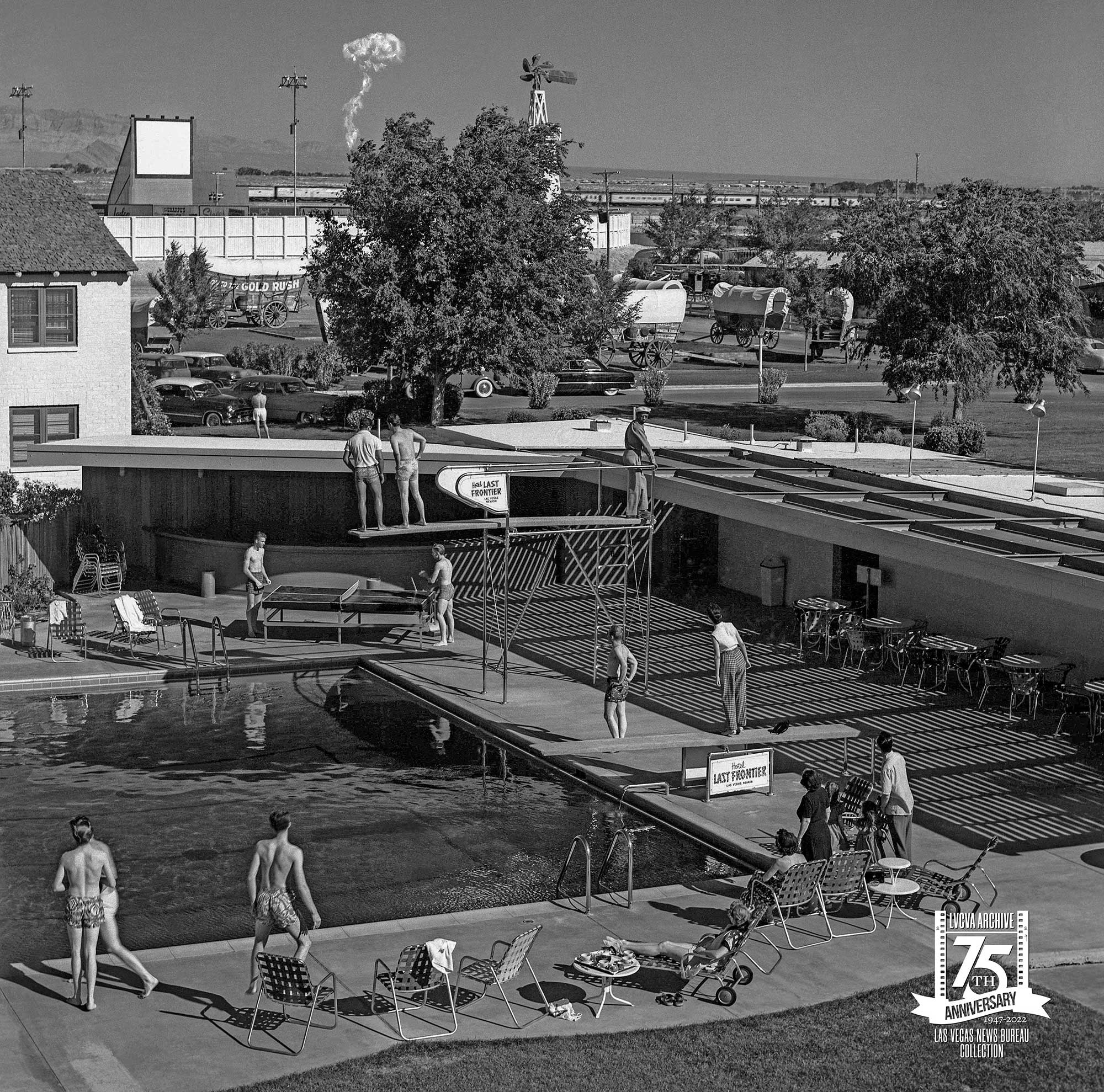
In 1951, the Los Angeles television station KTLA transmitted the first live images of a nuclear detonation at the NTS, captured surreptitiously from the top of a hotel in Las Vegas (approximately 65 miles away).4 Recognizing that the U.S.’s nuclear program could no longer be fully concealed, the U.S. Atomic Energy Commission reframed atomic testing as a positive beacon for the civil defense movement, releasing footage and permitting press coverage of highly orchestrated testing events. Lookout Mountain Laboratory, a secret film studio in the Hollywood Hills, produced classified motion pictures and still photographs used for these efforts.5
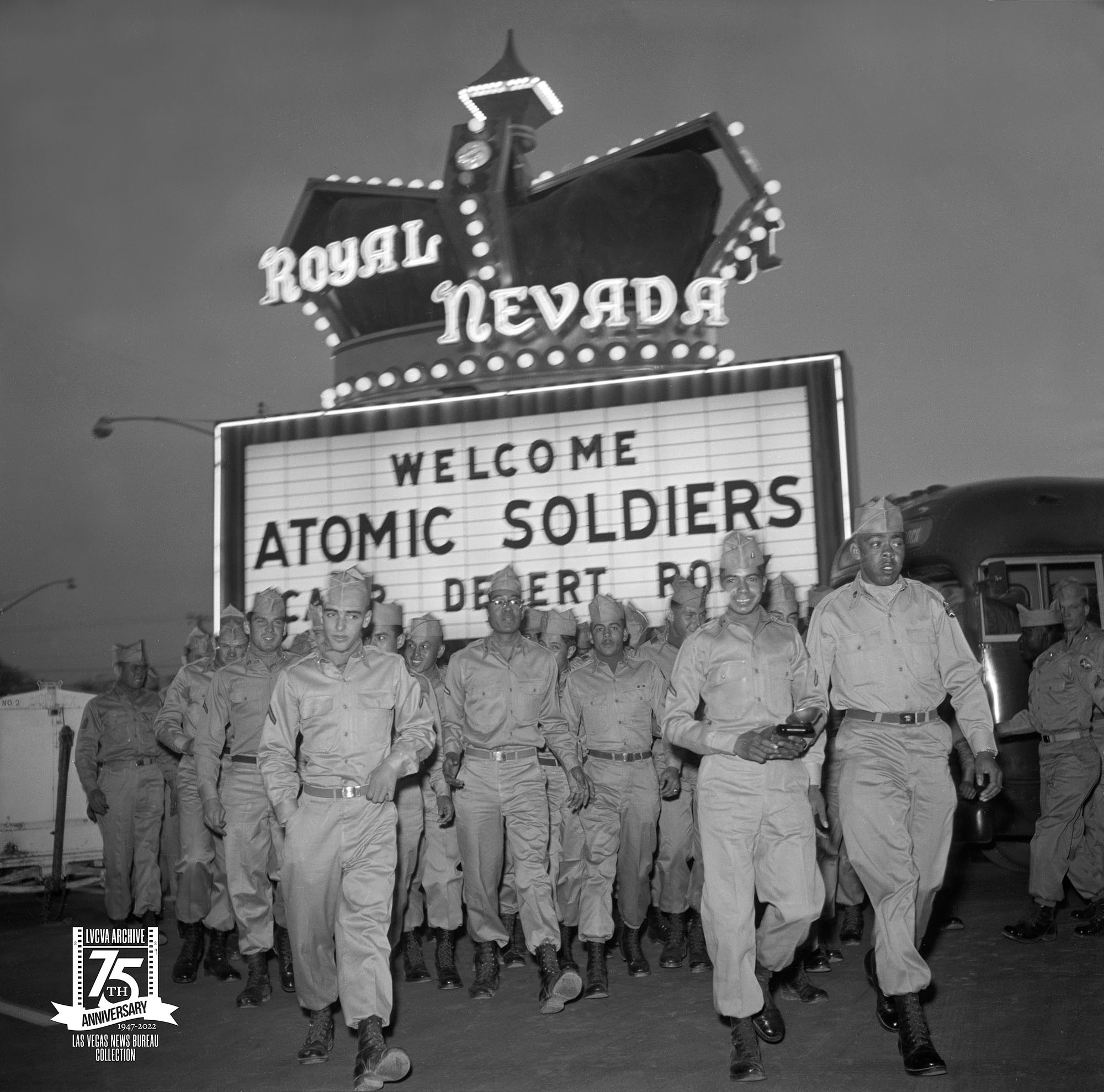
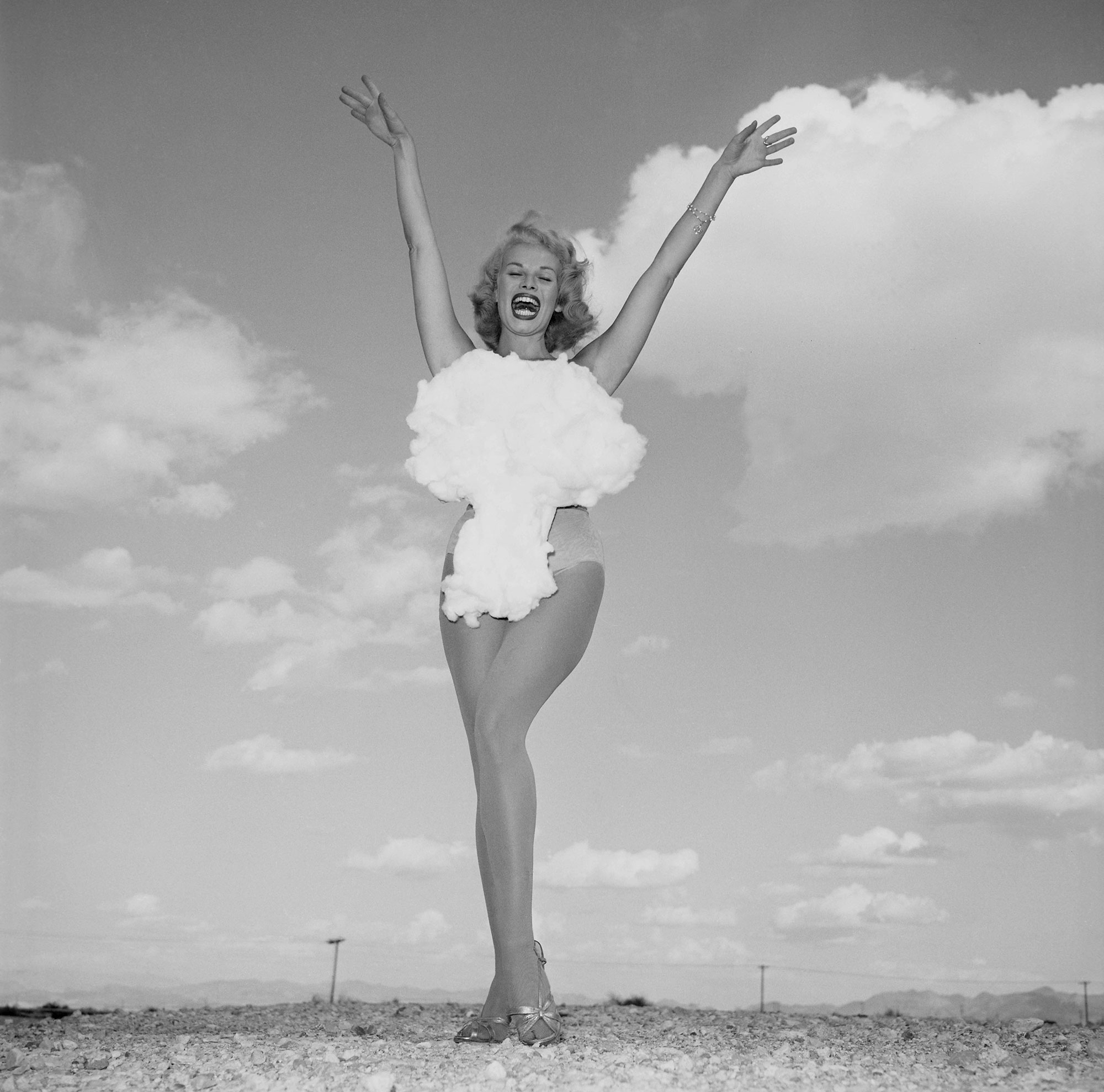
The circulation of this media transformed a once-secret military program in the Nevada desert into a carefully managed public spectacle. In Las Vegas, that spectacle became the phenomenon of atomic tourism, with businesses hosting bomb detonation watch parties and promoting atomic-themed cocktails, beauty pageants, and other attractions.6 Today, Nevada’s atomic history remains a major draw, with institutions like the Atomic Museum and Atomic Liquors advertised by the state’s tourism board. Despite this notoriety, however, the actual Test Site is largely inaccessible today, with limited public tours (canceled through 2026) prohibiting cameras and recording devices.
With the monumental size and allure of a roadside attraction, Atomic Open House likewise functions as a public spectacle. What differentiates it, however, is that it implicates the viewer and refuses to offer a single interpretation of history. Where you’re positioned determines what you see, asking you to consider what it means to bear witness—not just to the artwork, but to the region’s nuclear past, present, and future as well.
The Apple-2 Houses
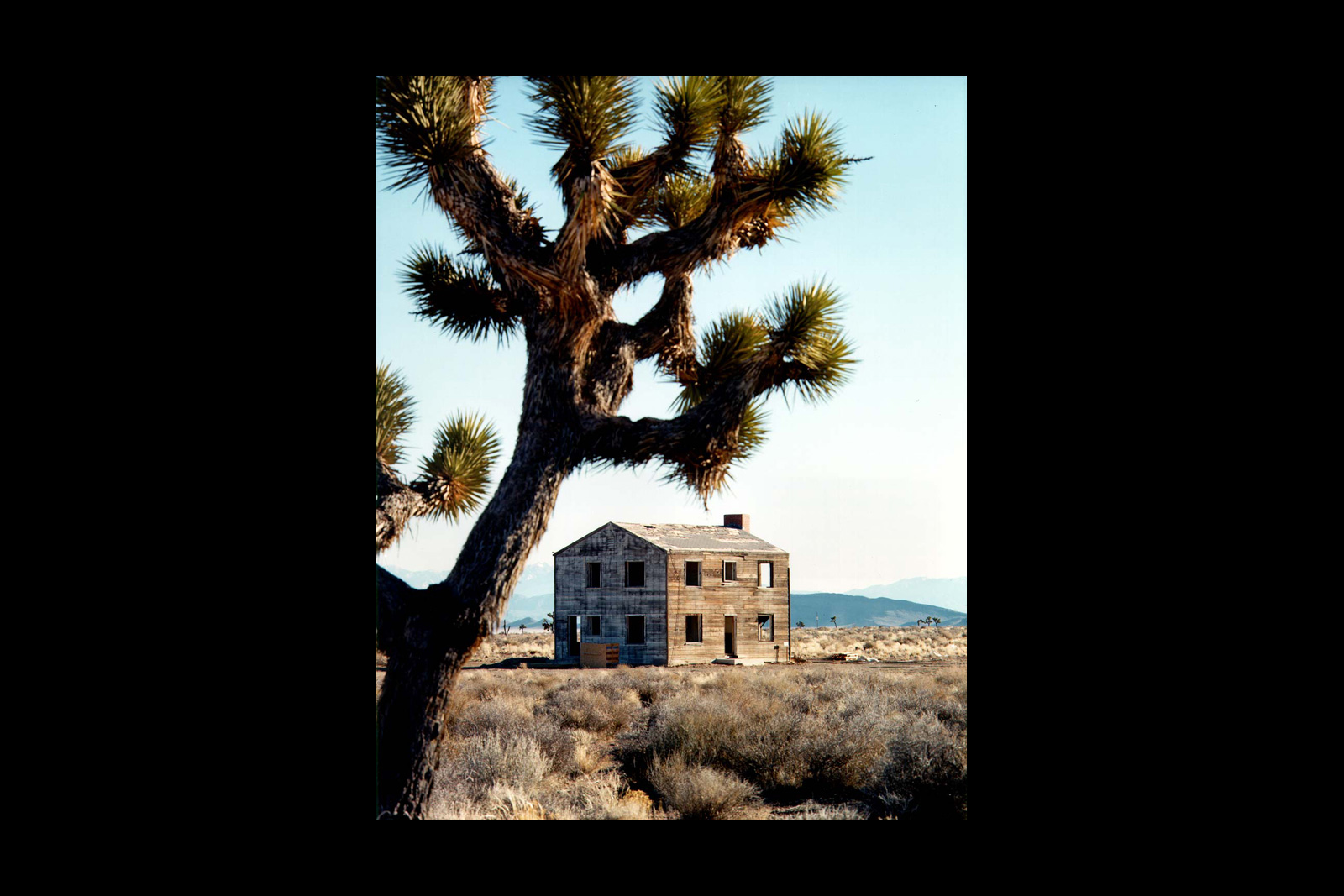
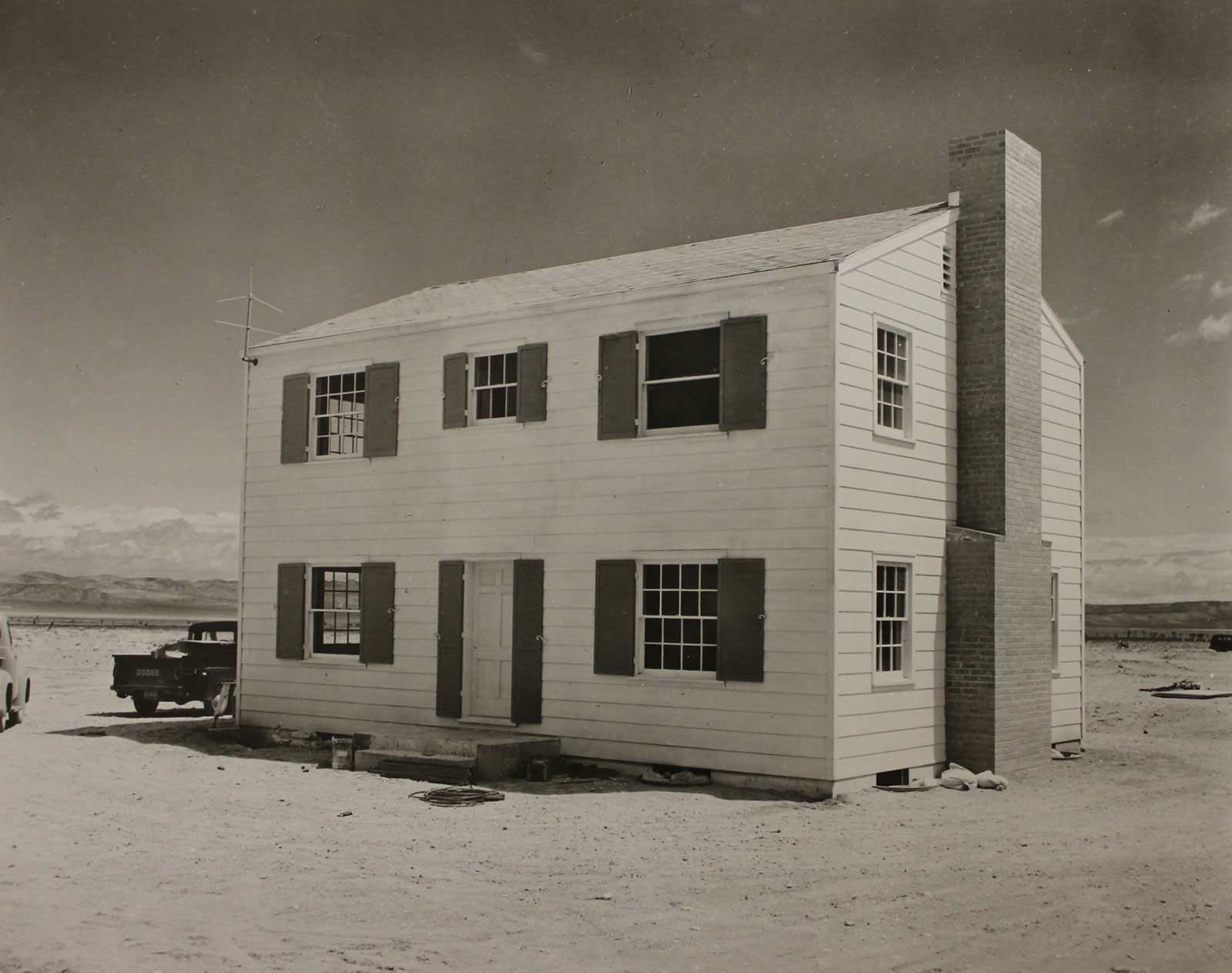
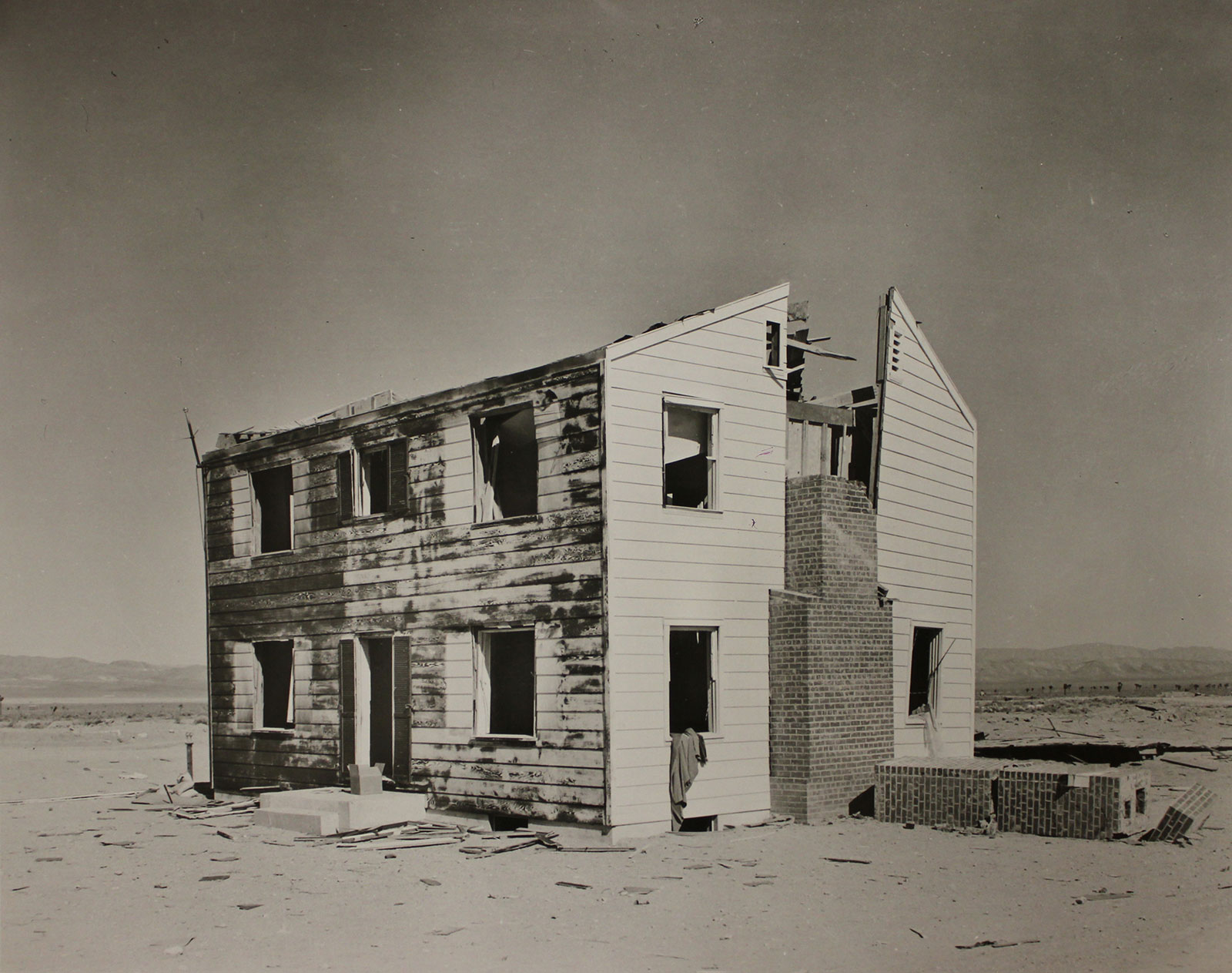
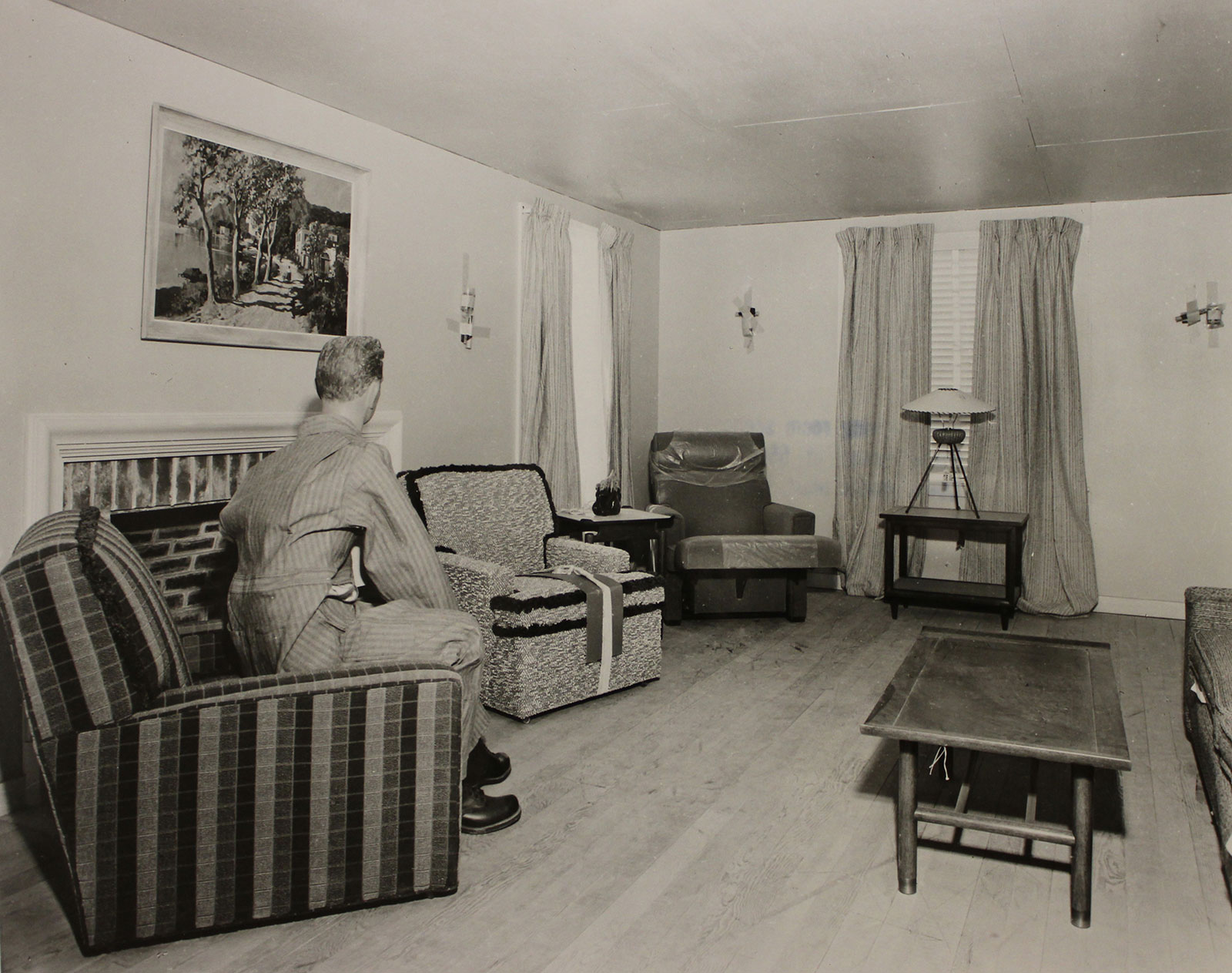
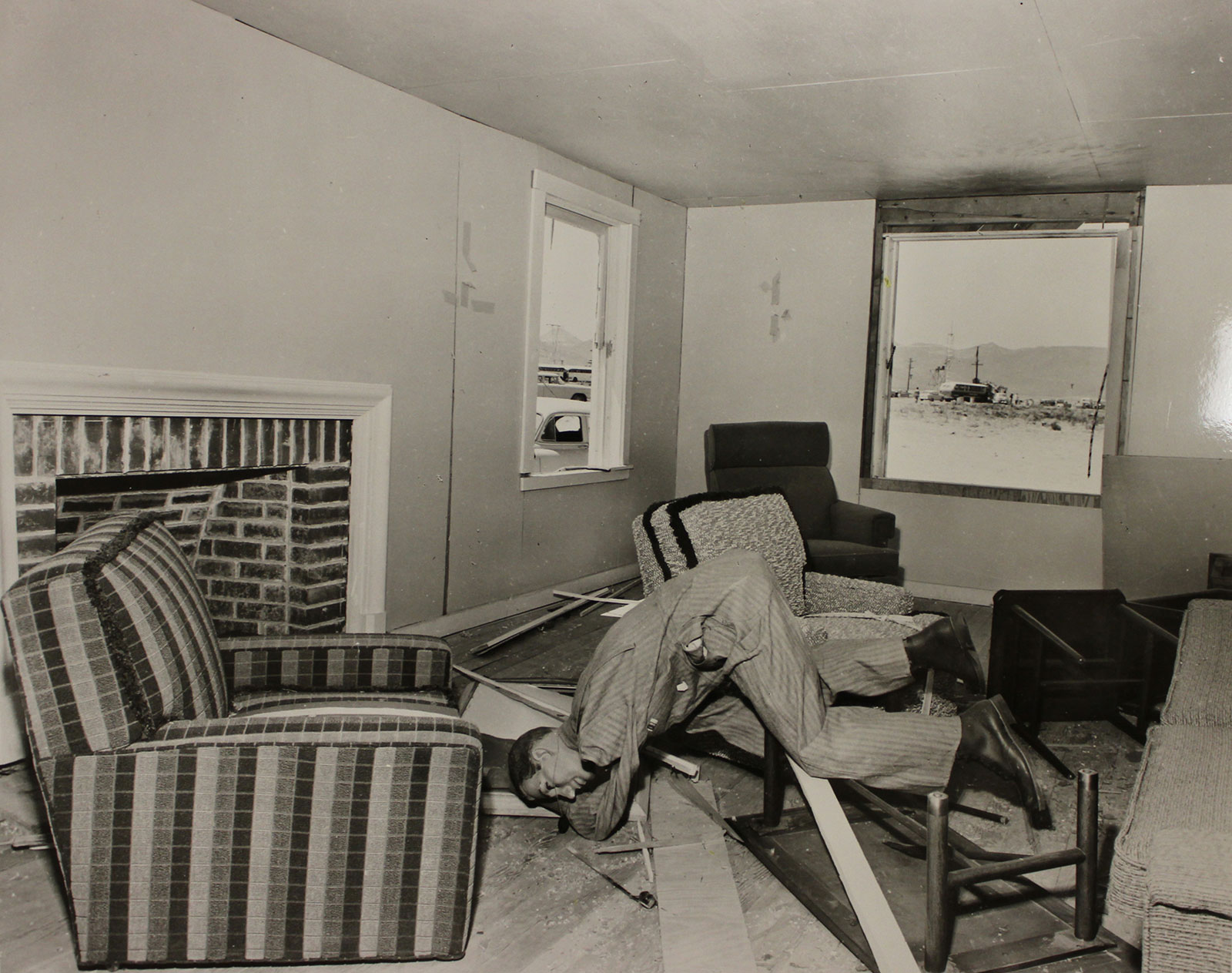
From February through May 1955, a series of 14 nuclear test explosions, known as Operation Teapot, was conducted at the Nevada Test Site. The penultimate explosion, Apple-2, took place on May 5, 1955. Prior to the shot, an array of buildings, including two double-story residential homes, were constructed at the NTS. The faux settlement, nicknamed “Doom Town” or “Survival Town,” was filled with mannequins, furniture, and food to simulate everyday life. A short film documenting Apple-2, entitled Operation Cue, was produced and distributed by the Federal Civil Defense Administration. In popular media, Indiana Jones fans might recall a fictionalized “Doom Town” in the fourth film of the franchise.
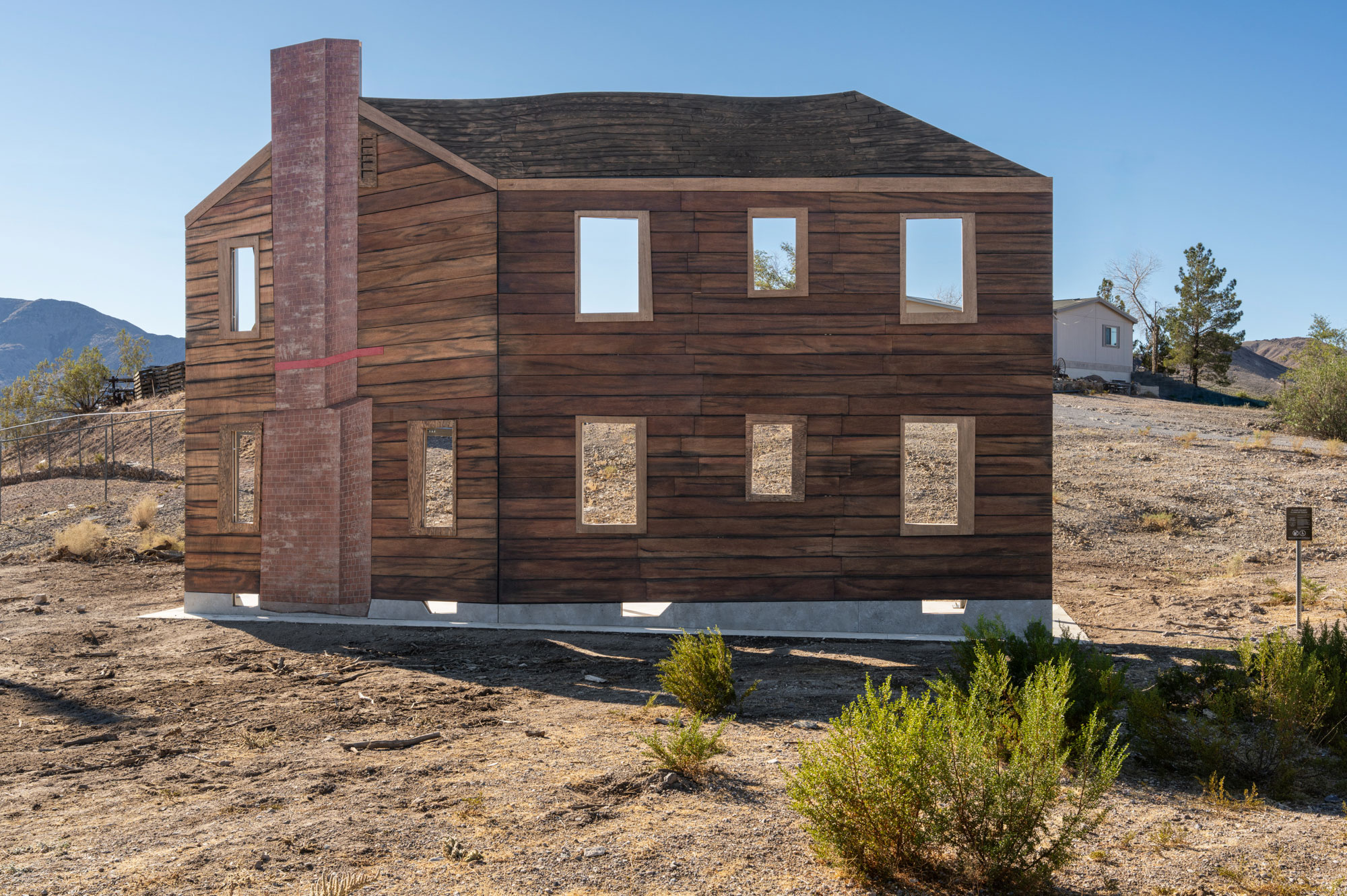
Remnants of the two-story residential homes, a wooden frame one approximately 6,600 feet from ground zero and a brick one approximately 8,000 feet from ground zero, remain standing on the Site today. Known as the Apple-2 Houses, these structures are a high point of the limited public tours available at the NNSS. The house component of Atomic Open House is modeled on these prop homes.
While presented as a way to gather data on how a nuclear event would impact typical American buildings, the Apple-2 shot is also notable for producing imagery of domestic, civilian life—i.e. families with their decorated living rooms and full fridges—met with military force. Even though the test took place in the Nevada desert, the use of demonstration buildings based on familiar suburban architecture gave Americans a visual of what the aftermath could look like in one’s own backyard.
Atomic Open House is situated on Main Street in Beatty, Nevada, a town long shaped by its proximity to the Test Site. Rather than being placed within a fictional community, however, the artwork sits in a real neighborhood, calling attention to Beatty’s, and the surrounding region’s, relationship to nuclear testing.
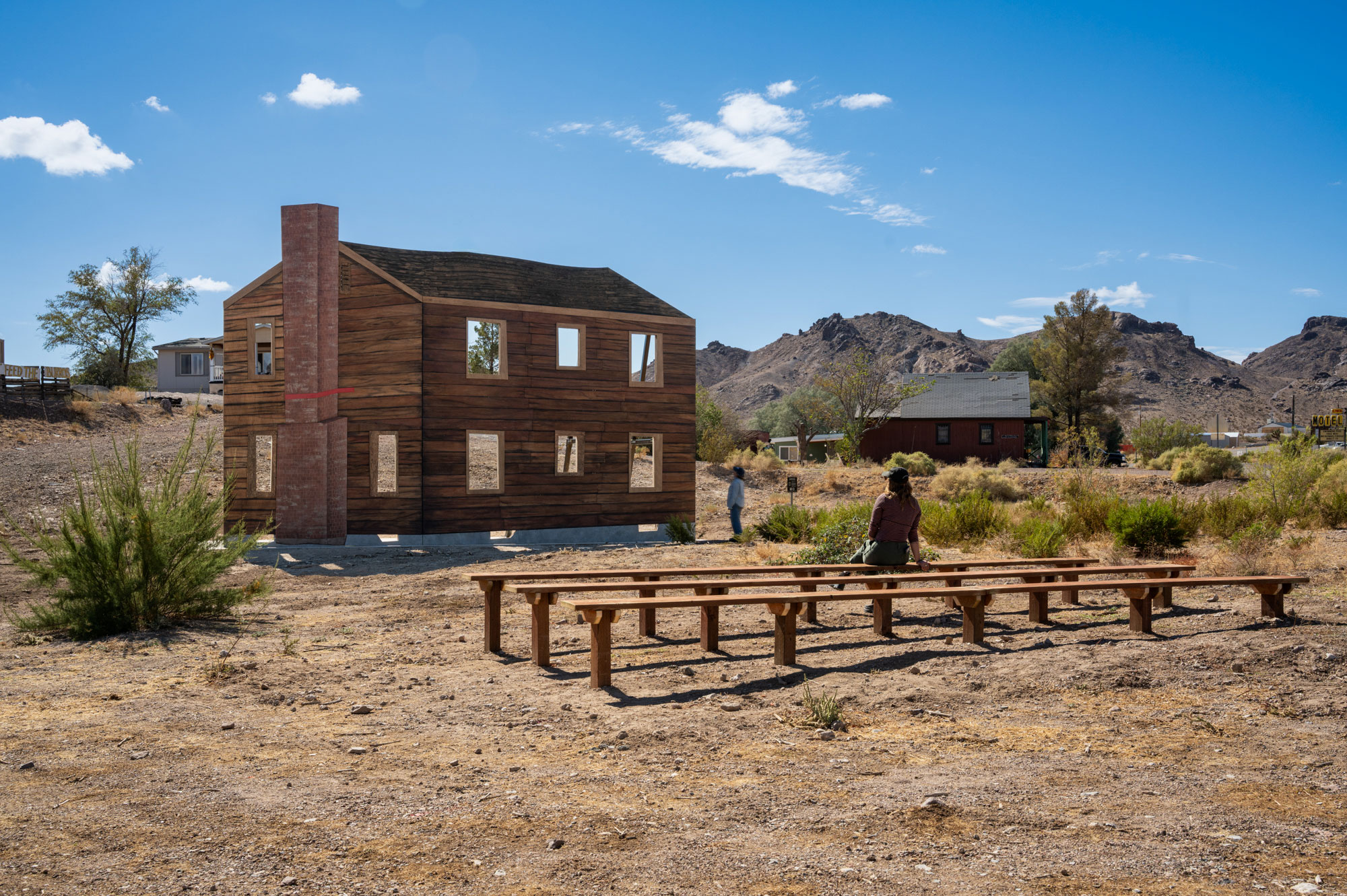
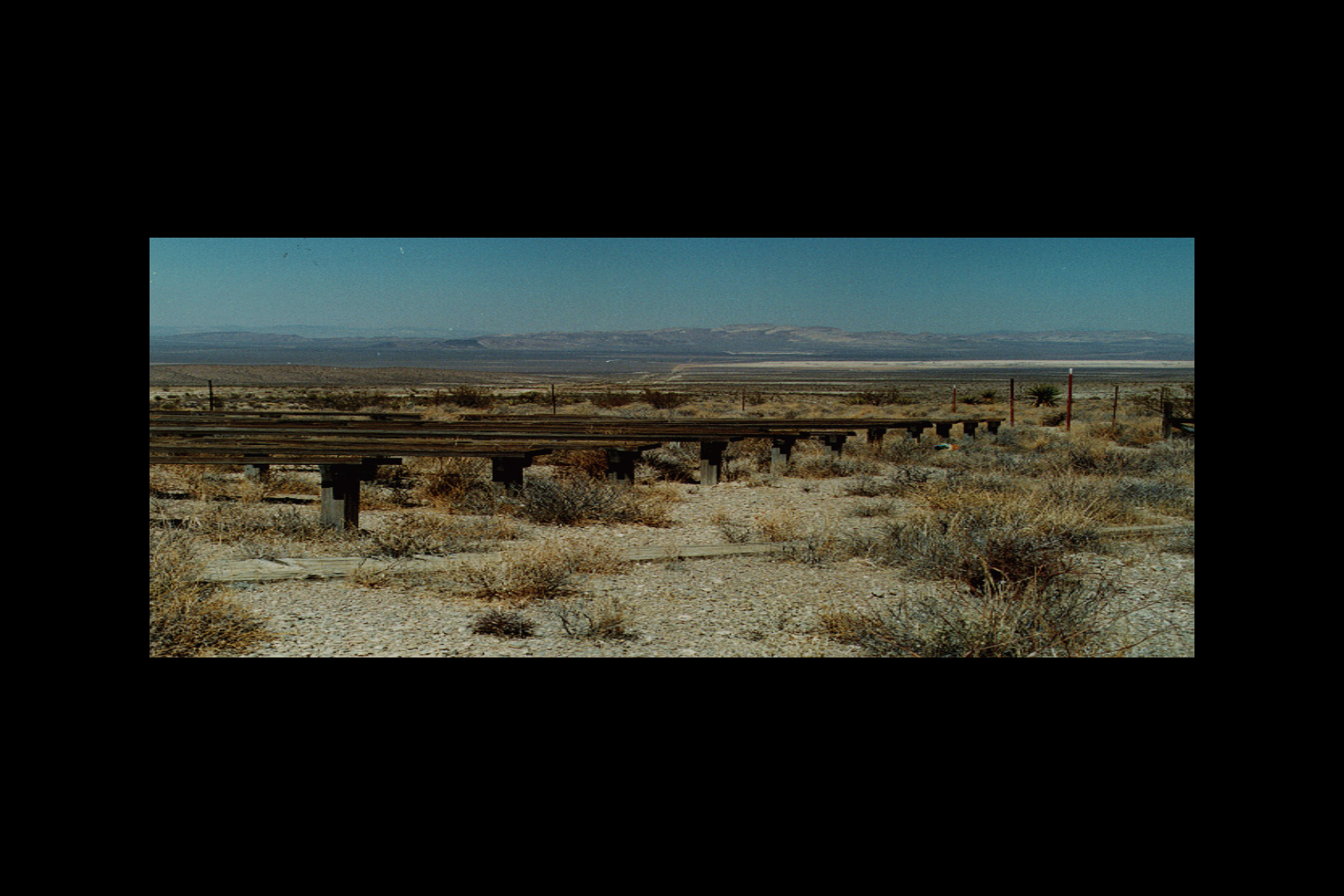
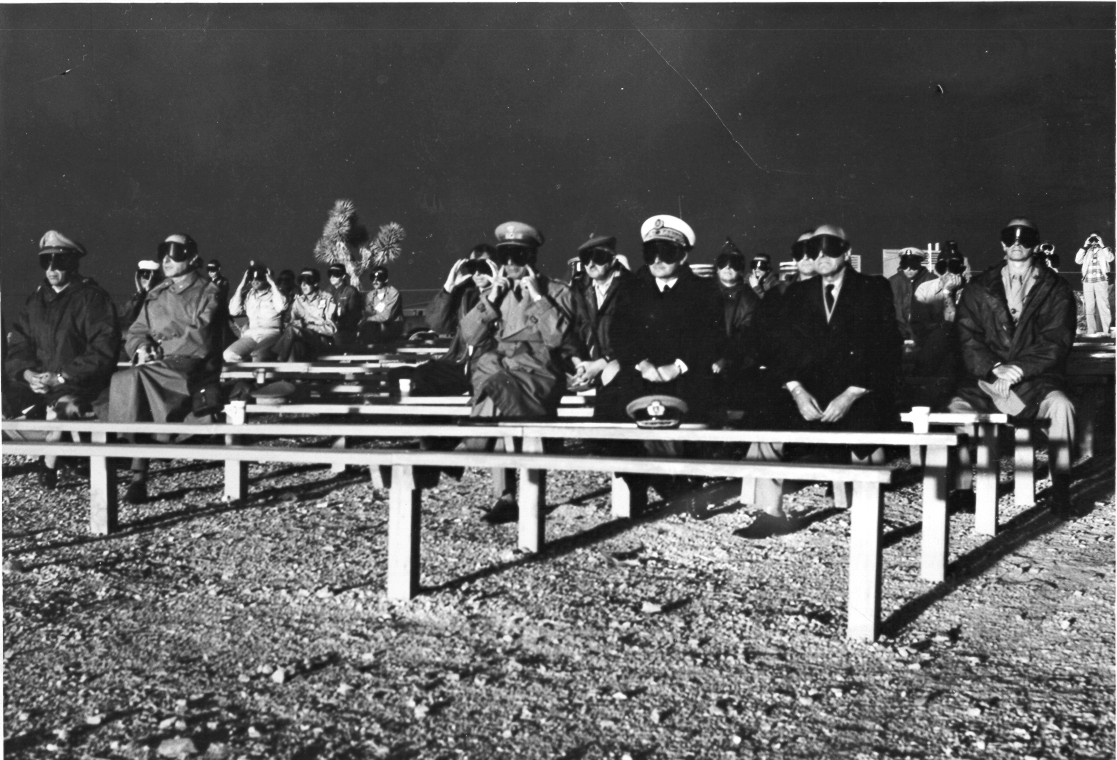
During the era of atmospheric nuclear testing at the NTS, many military and government officials, journalists, photographers, and other VIPs watched the detonations at close range. They clustered at specific vantage points such as “News Knob” near Yucca Flat (one of four major nuclear test regions within the NTS) and a set of bleachers located seven miles from Frenchman Flat (another major test region). The spectacle surrounding nuclear testing could not have happened without these firsthand viewing experiences.
Visitors to Atomic Open House are invited to sit on a set of benches modeled on the historic seating, turning the spectator into a key part of the artwork. The benches are placed at the exact angle needed for the building façade to appear three-dimensional. Step away from the benches, however, and the flatness of the prop house is revealed. The illusion calls attention to how different vantage points can shape one’s perspective, just as media, entertainment, and tourism inspired by nuclear testing shaped public opinion in the 1950s and beyond.
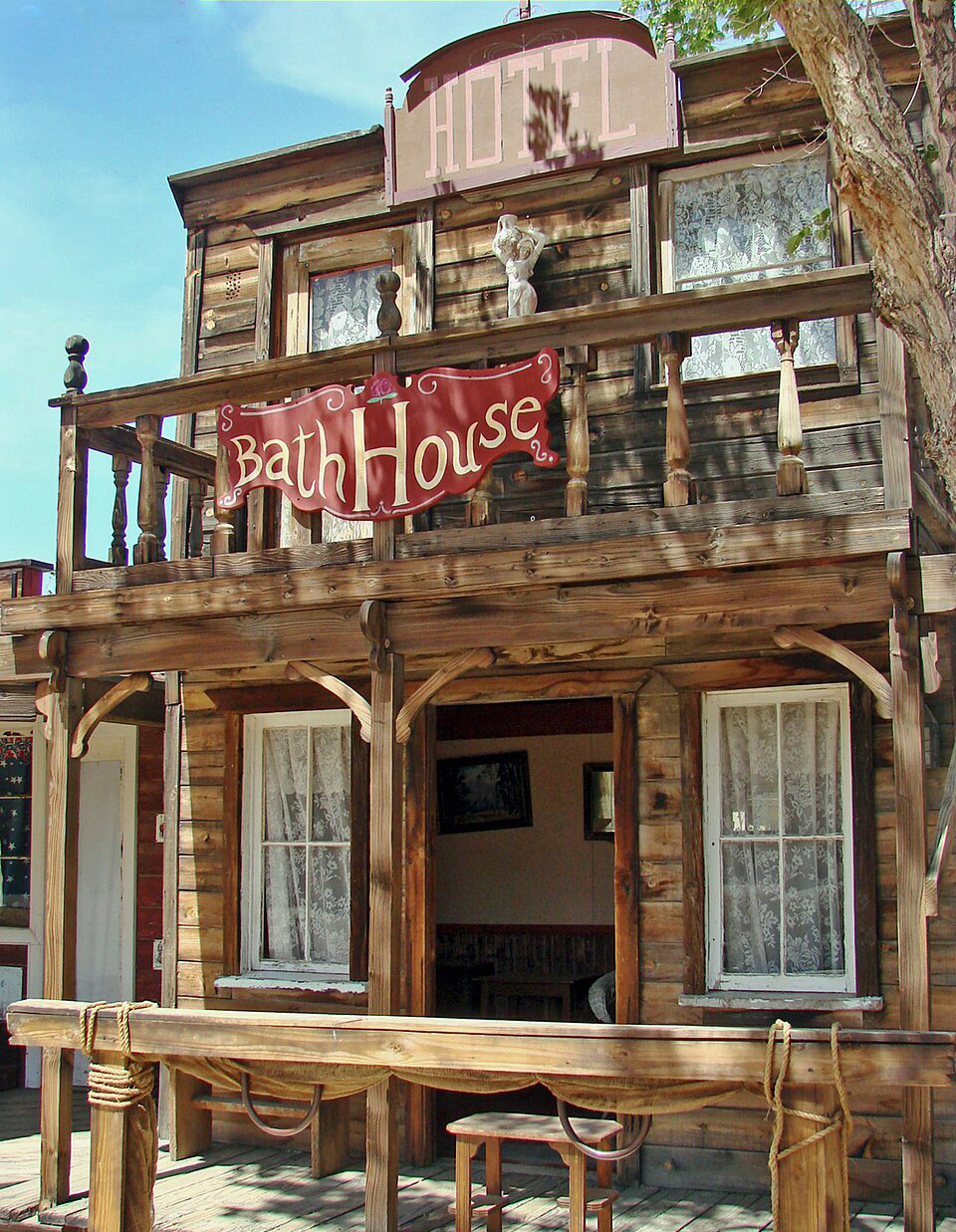
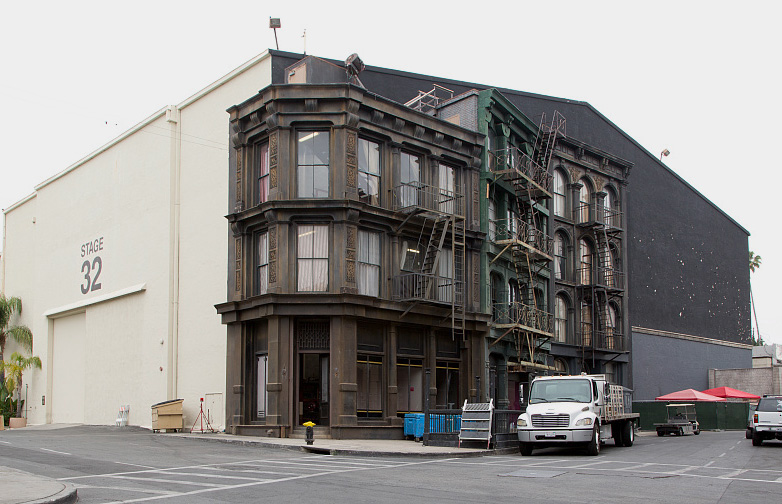
The forced perspective of Atomic Open House also ties in with other similar forms of experiential architecture built in the American West, such as Hollywood backlot sets and fake Western towns such as Pioneertown.